
Order protection on borrowed time: SEC's Selway calls Rule 611 decision 'a Q1 event in all likelihood'
The SEC's top markets official has put a rough date on the fate of the trade-through rule. Access-fee and tick-size recommendations are set to arrive alongside it, and FINRA is lining up best-execution guidance. For routing desks, the plumbing built around 'protected quotes' is now in play.
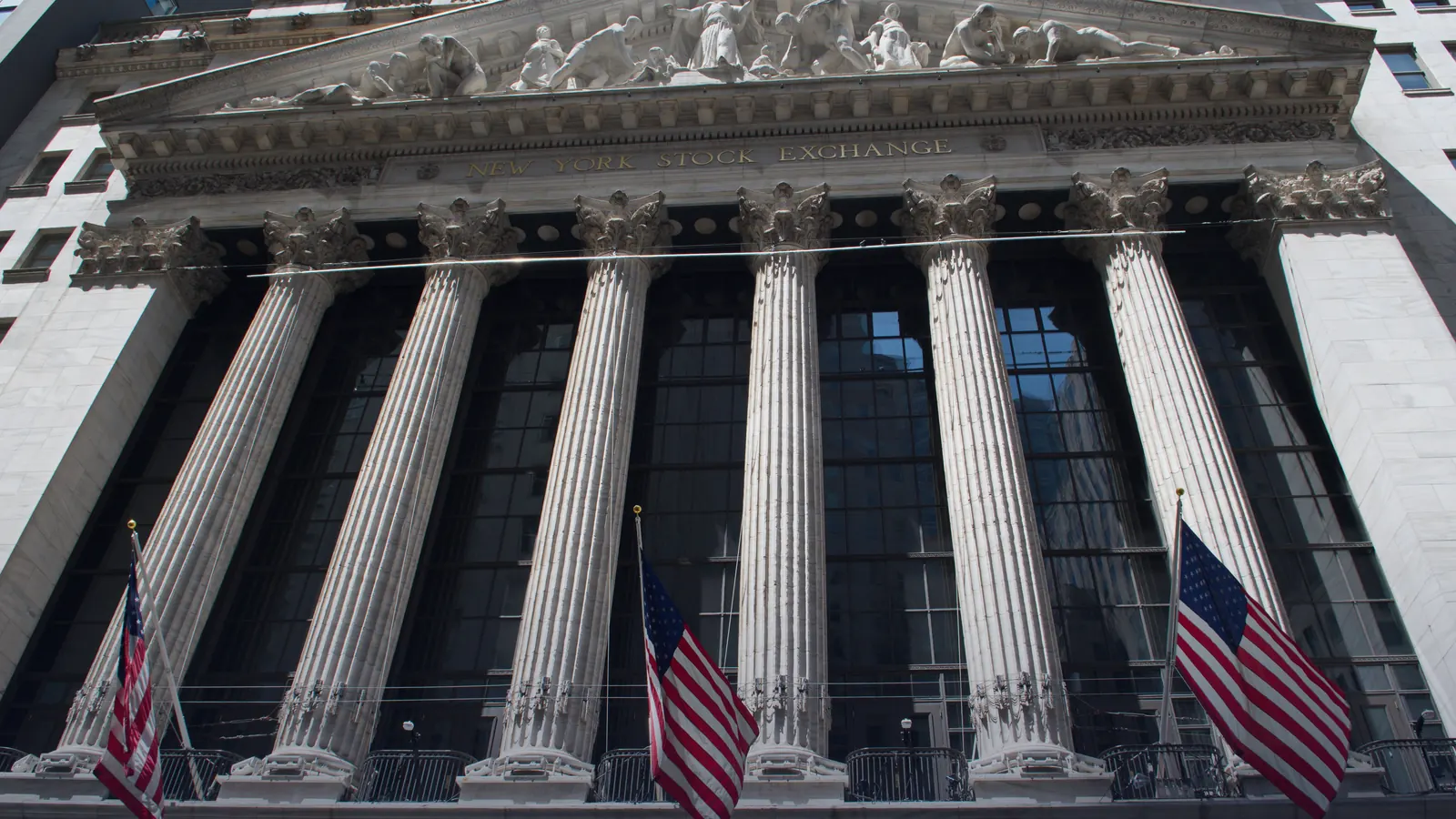
Two decades of the trade-through rule may be coming to an end. Jamie Selway, Director of the Securities and Exchange Commission’s Division of Trading and Markets, has said the agency is likely to act on Rule 611 of Regulation NMS, the Order Protection Rule, early next year.
“I think that 611 for us is a Q1 event in all likelihood,” Selway said at SIFMA’s 2026 Annual Meeting on 20 October, Traders Magazine reported. The publication said he was referring to the first quarter of 2027. Selway and Sebastian Gomez of the SEC’s Division of Corporation Finance both said they were speaking in a personal capacity, not for the Commission.
What is on the table
On 11 June the SEC proposed rescinding Rule 611, which bars trading through protected quotations displayed by other trading centres. It also proposed rescinding Rule 610(e), which restricts locked and crossed quotations. “After two decades of Rule 611, it is high time that the Commission review its unintended consequences that have hindered — rather than enhanced — the long-term growth of our markets,” SEC Chairman Paul Atkins said at the time. Comments were due by 17 August, according to the proposing release.
At SIFMA, Selway said the SEC had received about 1,200 comments, alongside input from two industry roundtables, and that market participants had raised concerns about the potential impact on the National Best Bid and Offer (NBBO).
Best execution moves centre stage
Selway linked the timing to best execution. “There’s lots of reasons to update best execution, not just 611, but also after-hours trading, overnight trading, or tokenization,” he said, according to Traders Magazine. He stressed that best execution remains FINRA’s responsibility. He also indicated that FINRA could first issue guidance alongside SEC action on Rule 611, with further rulemaking possibly following.
FINRA has already started. In July it published Regulatory Notice 26-15, seeking comment on modernising its best-execution guidance under Rule 5310. The notice cited the SEC’s trade-through proposal among its reasons, and comments closed on 25 September.
A package, not a single repeal
A week before SIFMA, Selway gave a speech at the Security Traders Association’s annual conference on 14 October, published by the SEC. It set out what is likely to come with the Rule 611 decision. He said two consistent themes had emerged from the comments. The first was that including only automated quotes in the NBBO is important if it is to remain a central benchmark for execution quality. The second was that any change to Rule 611 must be coordinated with modernised best-execution requirements.
He also said Chairman Atkins had directed the Division to review Rule 610 (access-fee caps) and Rule 612 (minimum pricing increments) by year-end. “Our review is well underway, and we fully expect to make recommendations to the Commission coincident with any change to Rule 611,” Selway said. He added that he believed further changes to the formula for allocating market data revenue “can—and should—be made” by the end of next year.
The numbers behind the debate
The SEC’s proposing release describes how fragmented the market is. In January 2026, NMS stocks traded on 17 exchanges, with three more approved but not yet operating, and on off-exchange venues that included 33 NMS Stock ATSs. The three largest exchanges by dollar volume had over 30% of all dollar volume. Ten of the other 14 each had less than 1%. Off-exchange venues, including ATSs and wholesalers, handled about 49.9% of share volume.
The Midpoint view
This section is analysis by The Midpoint, not reporting.
Routing becomes a choice rather than an obligation. Today every smart order router is built around protected quotes: exchange connectivity, intermarket sweep orders (ISOs) and exception handling all exist partly so that a firm does not trade through any of them. Without Rule 611, the question changes from “which quotes must I respect?” to “which venues give me the best result once fees, fill rates and signalling are counted?” That is a best-execution question, which explains why the SEC and FINRA are moving together.
The long tail of exchanges is most exposed. Ten venues have less than 1% of the market each. For some of them, protected-quote status is a large part of the reason anyone connects. If brokers no longer have to reach every top-of-book quote, connectivity, market data and fee spending will be reviewed venue by venue. Expect consolidation pressure, or new pricing to justify a place in the routing table.
Exchanges vs ATSs and wholesalers. Off-exchange venues already handle about half of all volume, so repeal is not simply a gift to dark venues. Allowing locked markets (the 610(e) piece) and a review of tick sizes could help exchanges compete on price. The proposal itself suggests exchanges could compete better with off-exchange market makers. In practice, everything depends on the detail of the access-fee and tick-size package.
Queue priority and the value of displaying. If quotes are no longer protected across venues, a quote’s value depends more on where it is displayed. Expect liquidity providers to concentrate on venues where they get filled, and queue position at the deepest venues to be worth more. Whether displayed liquidity grows or shrinks is the main open question, and it ties back to the NBBO concerns that commenters raised.
What desks should do now. List every place where Rule 611 is assumed: SOR logic, ISO flags, compliance surveillance, TCA benchmarks, and vendor and broker dependencies. Ask brokers how their routing tables and regular and rigorous reviews would change. Plan testing on the assumption that a Q1 decision, its implementation period and 23-hour trading may overlap.
What we are watching
- Whether the Commission adopts the rescission in the first quarter of 2027, as Selway expects, and what implementation period it allows.
- The detail of the access-fee and tick-size recommendations Selway expects to make at the same time as any change to Rule 611.
- The timing and content of FINRA’s best-execution guidance.
- How exchanges, particularly smaller venues, change fees and positioning in response.
Sources
- SEC Eyes Sweeping Market Reforms — Traders Magazine, 22 Oct 2026
- How Soon is Now? Remarks at the Security Traders Association’s 93rd Annual Market Structure Conference (Jamie Selway) — U.S. Securities and Exchange Commission, 14 Oct 2026
- SEC Proposes Rescission of Regulation NMS Rules 611 and 610(e) — U.S. Securities and Exchange Commission, 11 Jun 2026
- Proposed rule: The Trade-Through Rule and Locked and Crossed Markets Provisions of Regulation NMS (Release No. 34-105655) — U.S. Securities and Exchange Commission, Jun 2026
- Regulatory Notice 26-15: FINRA Requests Comment on Modernizing FINRA’s Best Execution Guidance — FINRA, 24 Jul 2026
Spotted an error? Email corrections@themidpointnews.com. See our editorial standards, including how we use AI and handle corrections.